We handle permits, inspections, utility coordination, demolition, and cleanup — so you don’t have to stress or guess

How Long Does a House Demolition Take?
House Demolition Process, Timeline, and Other Considerations You Need To Know
HOUSE DEMOLITION
1/30/20265 min read
How Long Does House Demolition Take?
There is no universal three-day timeline for residential house demolition.
Some straightforward demolition projects can move quickly once permits, utilities and site preparation are complete. Other properties require additional time because of structure size, equipment access, foundation removal, debris volume, inspections, weather or the requested final condition of the lot.
The physical teardown is only one part of the complete demolition process.
A typical project can involve:
Property and scope review
Permit and utility coordination
Site preparation
Structural demolition
Debris loading and hauling
Foundation or slab removal, if included
Final cleanup and grading
The total schedule should therefore be based on the actual property rather than a promise that every house will be gone in a specific number of days.
For complete service information, see Residential House Demolition Services.
What Happens Before Demolition Day?
Much of the demolition process happens before an excavator begins removing the structure.
Depending on the property and jurisdiction, preparation may include:
Confirming the demolition scope
Determining whether the slab or foundation will remain
Identifying the property's permitting jurisdiction
Coordinating applicable permits and inspections
Addressing electrical, gas, water or other utilities
Reviewing equipment access
Planning debris-container placement
Identifying nearby structures, trees, fences or other constraints
Removing personal belongings
Confirming the desired final condition of the lot
Utility coordination deserves particular attention because disconnecting service at a breaker or valve is not necessarily the same as completing whatever utility requirements apply to the demolition project.
For additional planning information, see The Ultimate Utility Disconnect Checklist for Texas Homeowners.
If neighboring homes are close to the demolition area, advance communication can also make the project easier to manage. See How to Inform Your Neighbors Before a House Demolition.
Demolition Day: Structural Removal
Once the property is ready for demolition, the structure can be removed using equipment appropriate for the building and site.
The demolition phase may involve:
Establishing the work area
Positioning demolition equipment
Controlled removal of the structure
Managing debris as the building comes down
Separating materials where practical
Loading debris for removal
Maintaining safe equipment access throughout the site
The length of this phase depends heavily on the property.
A small single-story wood-frame structure with open equipment access is very different from a two-story house surrounded by neighboring structures, fences or limited access.
Debris Hauling Can Take as Long as the Teardown
A house is not truly demolished simply because the structure is on the ground.
The debris still has to be:
Sorted or consolidated
Loaded
Hauled away
Handled according to applicable disposal requirements
Removed from the work area
Debris volume is one of the major factors affecting both demolition cost and schedule.
Large houses, masonry construction, heavy foundations and properties containing substantial contents can require additional hauling time and disposal capacity.
What Happens on Day Two or Day Three?
After the primary structure is removed, work may continue with:
Remaining debris loading
Foundation or slab removal
Concrete removal
Final hauling
Loose-material cleanup
Rough grading
Final grading
Preparing the property for its next planned use
The exact sequence varies by project.
If foundation removal is included, the schedule can be different from a project where the slab remains.
Likewise, a property that only requires demolition and debris removal may be completed more quickly than one requiring extensive grading or additional site work.
A Real Beaumont House Demolition Example
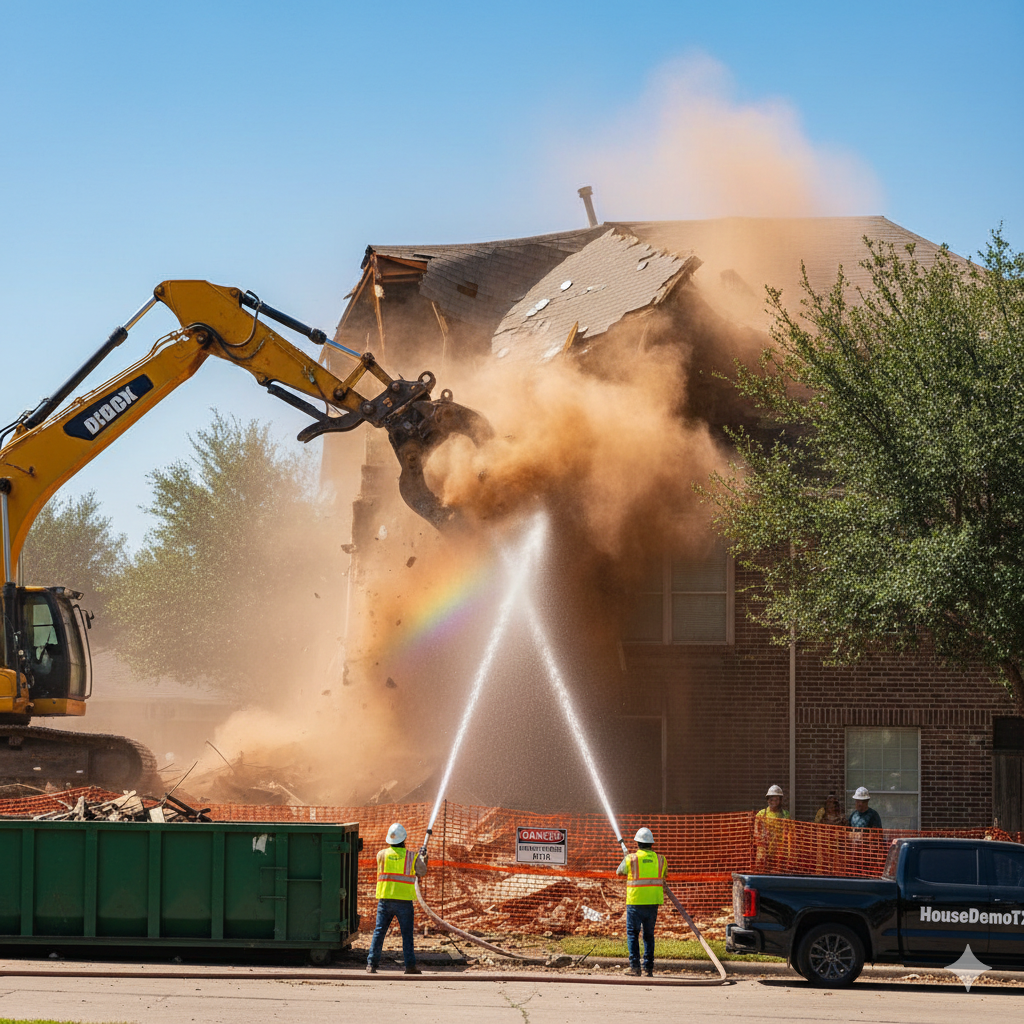
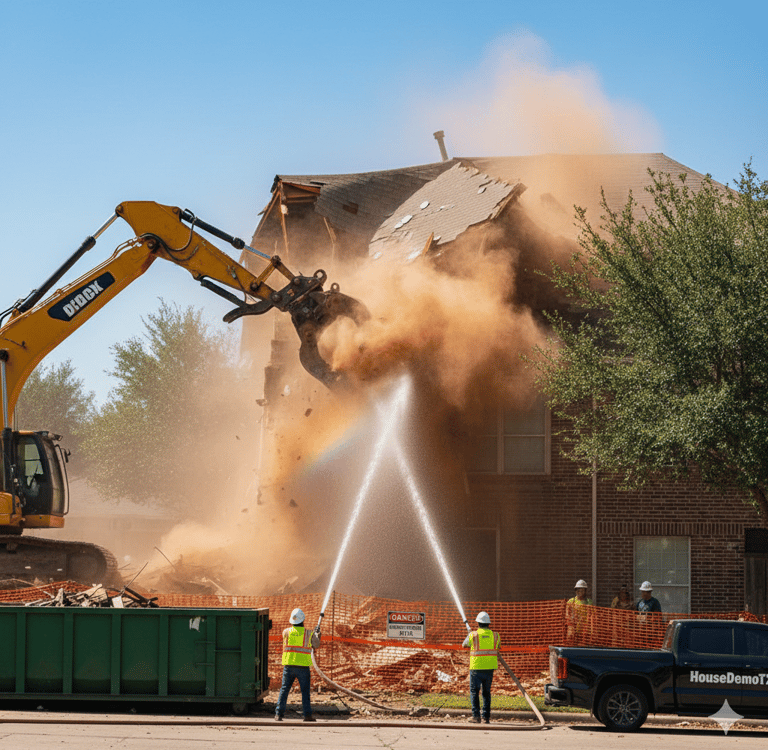
HouseDemoTX completed a documented two-story residential demolition project in Beaumont, TX over two days.
Day One: The two-story structure was demolished using an excavator, with a skid steer supporting debris handling.
Day Two: Remaining debris was loaded into 40-yard dumpsters, hauled from the property and the work area was cleaned for the next phase of the property.
The project demonstrates why a fixed “three-day demolition” rule is misleading. Some projects may require fewer days, while others can require more.
See the complete project:
Beaumont Two-Story House Demolition Case Study
You can also review additional completed work at the HouseDemoTX Projects Gallery.
What Can Make House Demolition Take Longer?
Several factors can extend a demolition schedule.
Permit or Inspection Requirements
Demolition requirements vary by jurisdiction.
A property inside Beaumont can follow different requirements from a property inside Houston, unincorporated Harris County or another Southeast Texas municipality.
Permit or inspection timing should therefore be confirmed for the specific property rather than assumed.
For local service information:
House Demolition in Beaumont, TX
House Demolition in Houston, TX
Utility Coordination
Electrical, gas, water, sewer and other utility requirements can affect when structural demolition is allowed to begin.
Starting the utility process late can delay an otherwise ready demolition project.
Structure Size
Larger houses generally create more demolition debris and require additional equipment and hauling time.
Construction Type
Wood-frame construction, brick, masonry, concrete and other materials require different demolition and debris-handling approaches.
Two-Story Structures
Height affects equipment positioning, debris fall zones and the demolition sequence.
Limited Equipment Access
Tight residential properties may require additional planning or smaller equipment.
Fences, trees, utility lines, adjacent houses, driveways and narrow access points can all affect the workflow.
For more about constrained job sites, see How We Get Heavy Machinery Into Small Backyards.
Foundation Removal
Removing a slab, piers or other foundation material adds work beyond simply removing the house structure.
The demolition estimate should clearly state whether the foundation will remain or be removed.
Debris Volume
A property containing furniture, household contents, accessory structures or substantial demolition material can require more containers and hauling.
Weather
Heavy rain and poor ground conditions can affect heavy-equipment access, debris loading and grading.
Final Site Requirements
There is a major difference between:
Removing the house and debris
Removing the foundation
Rough grading the property
Preparing the property for landscaping
Performing additional site-preparation work
The desired final condition should be defined before demolition starts.
For additional site work, see Residential Site Preparation Services.
How Long Should You Budget for the Complete Demolition Process?
Think about the project in two separate timelines.
Pre-Demolition Timeline
This can include:
Estimate and scope review
Permit processing
Utility coordination
Required inspections or documentation
Scheduling
On-Site Demolition Timeline
This can include:
Structural demolition
Debris loading
Hauling
Foundation removal
Cleanup
Grading
The on-site portion may take only a few days for some residential projects, but the complete process can take longer because preparation must occur before equipment arrives.
That is why HouseDemoTX provides a project-specific estimated schedule after reviewing the property instead of promising that every house demolition takes exactly two, three or five days.
How Can a Homeowner Help Keep the Project on Schedule?
Before demolition, provide the contractor with accurate information about:
Property address
Approximate house size
Number of stories
Condition of the structure
Whether the property is occupied
Known utility status
Foundation-removal requirements
Equipment access
Nearby structures
Desired final condition
Desired project timeline
Photographs are especially useful.
Send photos showing:
Front and rear of the structure
Both sides of the property
Driveway or equipment access
Nearby fences or buildings
Foundation or slab
Any accessory structures that should also be removed
Good information at the estimating stage makes it easier to develop an accurate scope and schedule.
What Should Be Included in the Demolition Schedule?
Before accepting an estimate, make sure you understand whether the proposed schedule includes:
Permit coordination
Utility requirements
Structural demolition
Foundation removal
Debris loading
Dumpster or truck hauling
Site cleanup
Grading
Final inspection requirements, if applicable
A contractor promising “three-day demolition” may be referring only to equipment time on the property rather than the complete process.
The important question is:
What will be completed when the contractor says the project is finished?
House Demolition in Beaumont and Greater Houston
HouseDemoTX primarily provides residential house demolition throughout Beaumont and Southeast Texas, with selected projects accepted throughout Greater Houston.
For Priority 1 service:
For Greater Houston:
For complete service information:
Residential House Demolition Services
For real completed work:
Beaumont Two-Story House Demolition Project
Request a House Demolition Estimate
For faster estimating, provide:
Property address
Approximate structure size
Photographs
Equipment-access information
Whether the foundation should be removed
Your intended use for the property afterward
Call 832-981-2466