We handle permits, inspections, utility coordination, demolition, and cleanup — so you don’t have to stress or guess

The Neighborly Approach: How to Inform Your Neighbors Before a House Demolition (Free Template)
The Neighborly Approach: How to Inform Your Neighbors Before a House Demolition (Free Template)
DEMOLITIONHOUSE DEMOLITION
1/30/20261 min read
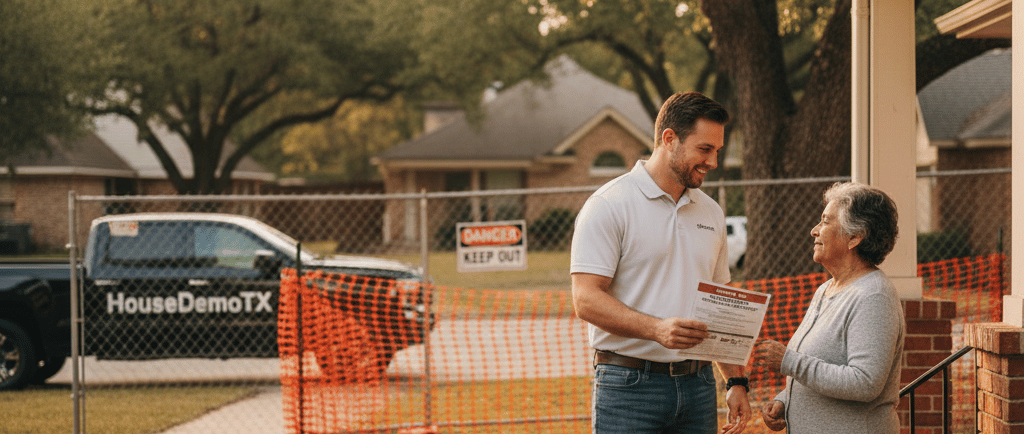
The Neighborly Approach: How to Inform Your Neighbors Before a House Demolition (Free Template)
Planning a house demolition in Houston, San Antonio, or Austin isn't just about permits and heavy machinery—it’s also about good neighbor relations. A demolition project, while exciting for your property's future, can be disruptive to those living nearby. Dust, noise, and increased traffic are all valid concerns.
At HouseDemoTX, we understand the importance of community. Proactive communication can turn potential complaints into understanding. Here’s a step-by-step guide, complete with a free template, to help you inform your neighbors respectfully and effectively before demolition begins.
1. Why Proactive Communication is Key
Ignoring your neighbors until the excavator rolls in is a recipe for complaints to your HOA, city officials, or even social media backlash. By contrast, a simple conversation or letter can:
Reduce Stress: For both you and your neighbors, by setting clear expectations.
Build Goodwill: Show you're a considerate property owner.
Prevent Delays: Avoid calls to city inspectors that could pause your project.
Manage Expectations: Clearly communicate the timeline and potential inconveniences.
2. When and How to Deliver the News
Timing is crucial. You want to inform them early enough for them to prepare, but not so early that the information is forgotten.
Ideal Window: 2-3 weeks before the anticipated start date of the physical demolition.
Method: A personalized letter or flyer delivered directly to their door. For immediate adjacent neighbors, a brief, in-person conversation followed by the letter is ideal.
What to Include in Your Communication (The Essentials):
Project Type: Clearly state you're demolishing the existing structure.
Estimated Dates: Provide a start date and an estimated completion date for the demolition phase.
Anticipated Disruptions: Be honest about noise, dust, and truck traffic.
Contact Person: Provide your contact information (or your contractor's project manager) for questions, not just a general company number.
Reassurance: Emphasize that all work will be compliant with local ordinances.