We handle permits, inspections, utility coordination, demolition, and cleanup — so you don’t have to stress or guess

Removing a Pool Near a Septic Tank: What You Need to Know
In 2026, Texas environmental regulations regarding septic systems (OSSF - On-Site Sewage Facilities) are stricter than ever. If you are planning a pool removal, here is the protocol we follow to protect your home’s most vital infrastructure.
SWIMMING POOL REMOVAL
1/30/20262 min read
Removing a Pool Near a Septic Tank: What You Need to Know
In 2026, Texas environmental regulations regarding septic systems (OSSF - On-Site Sewage Facilities) are stricter than ever. If you are planning a pool removal, here is the protocol we follow to protect your home’s most vital infrastructure.
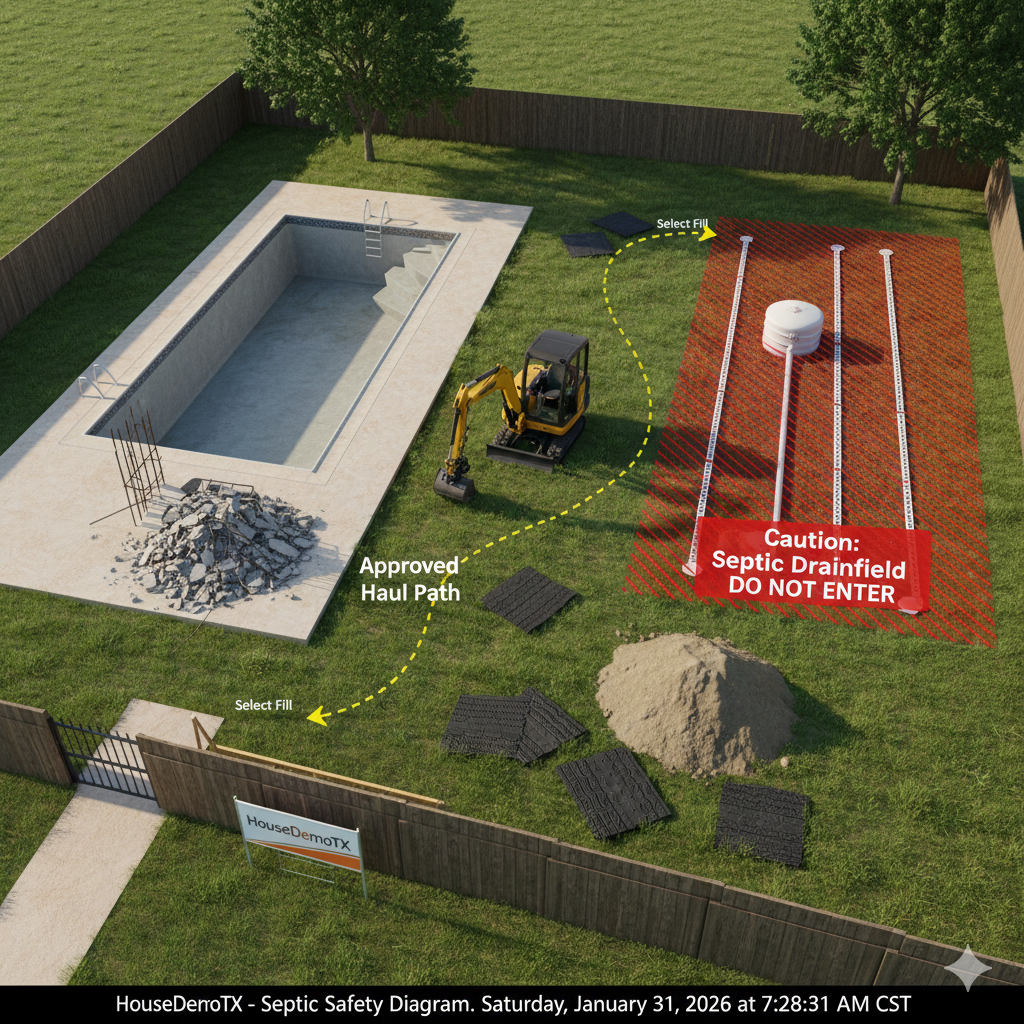
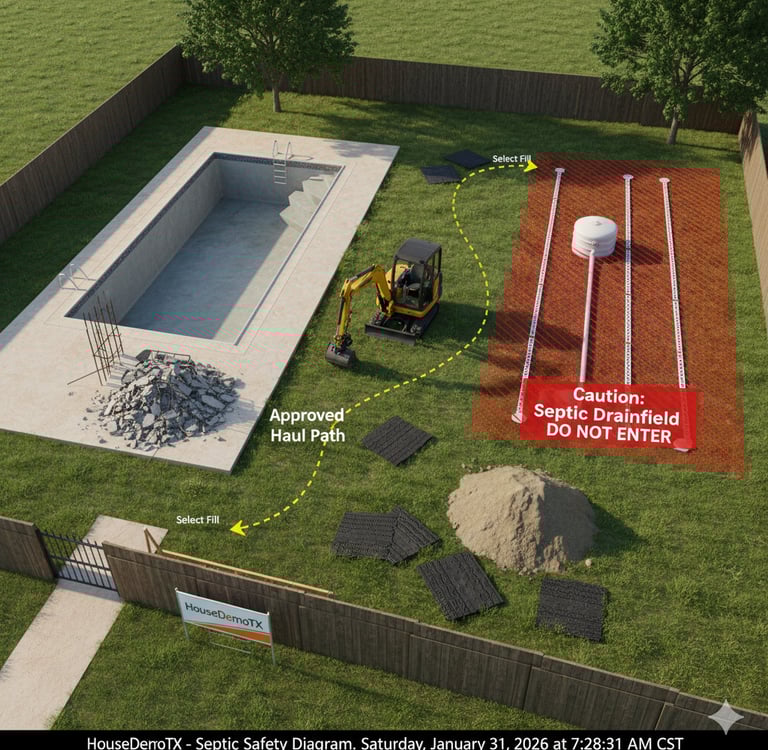
1. Locate and Flag the "No-Go Zone"
Before any equipment arrives, we must identify the two main components of your system:
The Tank: Usually concrete or fiberglass. Even if it’s buried deep, it cannot support the weight of a 10,000lb excavator.
The Drain field (Leach Field): This is a series of perforated pipes (lateral lines) underground. Driving over these compacts the soil, destroys the "aeration" needed for the system to work, and can crush the pipes entirely.
2. The Weight Distribution Strategy
The biggest risk in pool removal is the "Haul Path." To get 100+ tons of fill dirt into your old pool, we have to drive back and forth dozens of times.
The Problem: Repetitive heavy loads over or near a septic field will cause the system to fail.
The Solution: At HouseDemoTX, we use specialized Ground Protection Mats to bridge any areas that might be close to your lines. If the only access to the pool is over the drain field, we may utilize smaller, lighter "Georgia Buggies" to transport dirt rather than full-sized loaders.
3. Managing "Hydrostatic Pressure" & Drainage
When you remove a pool, you are changing how water moves through your yard.
The Risk: If the pool is filled improperly, it can act as a "basin" that directs groundwater toward your septic tank. Excess water in the soil can "saturate" your drain field, causing sewage to back up into your house.
The Engineering: We ensure the final grade of your pool removal slants away from the septic area. We also prioritize Mandatory Drainage Holes in the pool floor to ensure water moves vertically down into the water table, rather than horizontally toward your tank.
4. Setback Requirements (The 10-Foot Rule)
Most Texas counties require a minimum 10-foot setback between a pool structure and septic components.
During Demo: We respect these boundaries to ensure we don't vibrate or destabilize the earth around your tank.
Post-Demo: Once the pool is gone, that area is now "open land," but you still shouldn't build anything heavy (like a guest house or shed) on the old pool site if it encroaches on the septic's "protected zone."
Don't Risk a Backyard Disaster
A "cheap" pool removal becomes the most expensive mistake of your life if it destroys your septic system. HouseDemoTX starts every rural project with a septic map review and a clear equipment path.