We handle permits, inspections, utility coordination, demolition, and cleanup — so you don’t have to stress or guess

Does Pool Removal Increase Home Value? | Beaumont & Houston
Does removing a swimming pool increase home value? Learn when pool removal can improve marketability, yard use and resale appeal in Beaumont and Greater Houston.
SWIMMING POOL REMOVAL
1/30/20267 min read
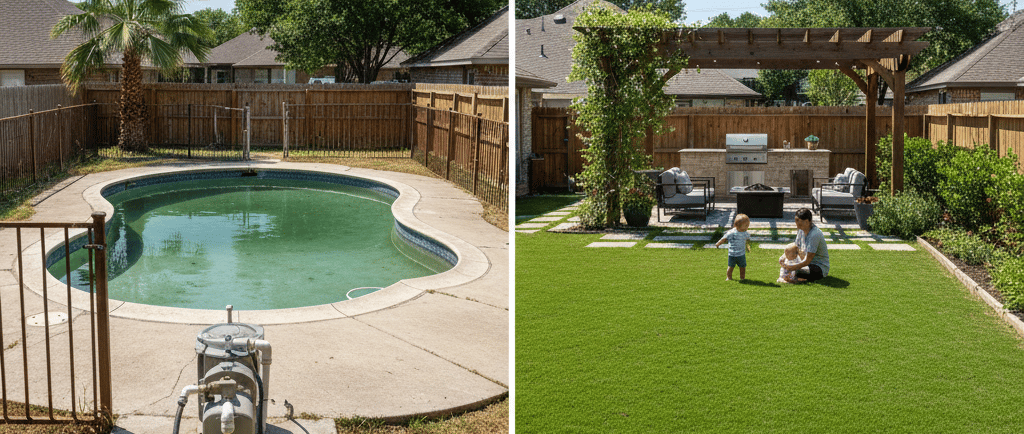
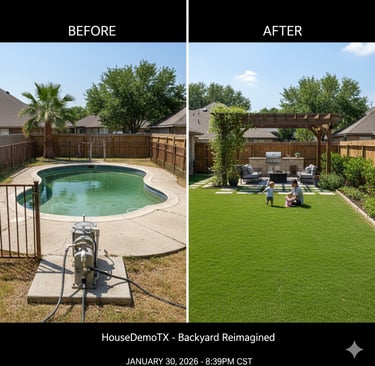
Does Removing a Pool Increase Home Value? When Pool Removal Makes Sense
A swimming pool can be one of the most enjoyable features of a Texas home—but it can also become an expensive, unused part of the property that limits backyard space and creates another maintenance responsibility.
For homeowners considering swimming pool removal, one of the biggest questions is:
Will removing my pool increase the value of my home?
The answer is not automatically yes or no.
Removing a pool can improve the marketability, usability and appeal of some properties, while a well-maintained pool may remain an attractive feature on others. The right decision depends on the condition of the pool, neighborhood expectations, available yard space, repair costs, how the property will be used and what future buyers are likely to value.
HouseDemoTX primarily provides pool removal in Beaumont and Southeast Texas, with selected projects throughout Greater Houston.
Does Removing a Pool Automatically Increase Property Value?
No.
There is no universal rule that removing a swimming pool will increase the appraised value or eventual sale price of a property.
A pool can add appeal when it is:
In good condition
Appropriate for the size of the property
Consistent with neighboring homes
Regularly used
Well integrated into the backyard
Something buyers in that particular market expect
A pool can become a disadvantage when it is:
Old or deteriorated
Expensive to repair
Rarely used
Taking up most of the usable backyard
Creating maintenance or safety concerns
Affecting drainage or yard usability
A feature prospective buyers may not want to maintain
The better question is not simply:
“Does a pool add value?”
It is:
“Does this particular pool make this particular property more or less desirable?”
When Pool Removal Can Improve Marketability
Removing a pool may make sense when the pool has become more of a burden than an amenity.
The Pool Is No Longer Being Used
An unused swimming pool still requires attention.
Homeowners may continue dealing with cleaning, chemicals, pumps, filters, repairs, water and general upkeep even when the pool receives very little use.
If your family no longer uses the pool, converting that area into usable yard space may provide more everyday value.
The Pool Needs Major Repairs
A pool requiring significant structural, plumbing, surface or equipment repairs can create a difficult decision.
Before investing heavily in repairs, compare:
The cost of restoring the pool
The expected remaining life of the pool
How often you actually use it
The cost of continued ownership
The cost of properly removing it
Your plans for the property
For some homeowners, repairing the pool is the right decision.
For others, removal creates a cleaner long-term solution.
The Pool Dominates the Backyard
A large pool on a relatively small lot can leave very little usable outdoor space.
After removal, the former pool area may potentially be used for purposes such as:
Lawn
Landscaping
Play space
Garden space
Outdoor entertaining
Patio improvements
Future construction is a separate issue and should be evaluated based on the removal method, fill, compaction, engineering requirements and applicable building rules.
You Are Preparing the Home for Sale
Some buyers actively want a swimming pool.
Others see it as:
Additional maintenance
A safety consideration
An operating expense
A feature they will rarely use
Lost backyard space
Removing an old or undesirable pool can make a property appeal to a different group of buyers.
That does not guarantee a higher sale price.
It may, however, improve the way certain buyers view the property by replacing an unwanted feature with flexible outdoor space.
When Keeping the Pool May Be the Better Choice
Pool removal is not automatically the right financial decision.
Consider keeping the pool when:
The pool is in excellent condition
You and your family use it regularly
Similar homes in the neighborhood commonly have pools
The pool complements the house and yard
Repair requirements are reasonable
You expect to remain in the home and enjoy the pool for years
Removing a desirable pool solely because you assume it will increase home value can be a mistake.
The decision should reflect the property, neighborhood and homeowner's goals.
Think Beyond Sale Price: What Does the Pool Cost You to Own?
Property value is only part of the equation.
An older swimming pool can involve ongoing expenses associated with:
Cleaning
Chemicals
Electricity
Water
Pumps
Filters
Heaters
Plumbing repairs
Surface repairs
Equipment replacement
Landscaping around the pool
Safety equipment
These expenses vary significantly from one pool and household to another.
Rather than relying on a generic annual savings figure, review your actual pool expenses from the previous 12–24 months.
Compare that amount with:
Expected future repairs
How much you use the pool
The cost of removal
The value you place on additional yard space
Your expected ownership or sale timeline
That provides a much better financial picture than assuming every pool costs the same amount to maintain.
Repair the Pool or Remove It?
Homeowners with aging pools often face three choices:
Option 1: Repair and Keep the Pool
This can make sense when the pool is fundamentally sound and you still want it.
Get repair estimates before assuming removal is cheaper.
Option 2: Partially Remove the Pool
Partial removal generally leaves portions of the pool structure below grade while the area is backfilled according to the approved project scope.
It may involve a smaller demolition scope, but the remaining buried structure should be considered when planning future use of the property.
Option 3: Fully Remove the Pool
Full removal generally involves removing the pool shell and demolition debris before backfilling, compacting and grading the excavation according to the project scope.
Full removal provides greater flexibility because the original pool structure is removed, but future construction still depends on factors such as fill, compaction, engineering and applicable building requirements.
For a more detailed comparison, read:
Partial vs. Full Pool Removal: Which Is Right for Your Property?
Why the Quality of Pool Removal Matters
Removing a swimming pool is not only about breaking concrete and adding dirt.
The long-term condition of the former pool area can depend on:
Demolition method
Material removal
Drainage
Backfill material
Placement of fill
Compaction
Soil conditions
Final grading
Intended future use
Poor backfilling can contribute to settlement, drainage issues and depressions in the finished yard.
That is why the scope should be determined before demolition begins rather than treating pool removal as simply filling a hole.
For more information, read:
How Improper Pool Infill Causes Backyard Sinkholes—and How to Reduce the Risk
Does Full Pool Removal Add More Value Than Partial Removal?
Not necessarily in a specific dollar amount.
However, full removal can be easier for a future buyer to understand because the original pool shell has been removed.
Partial removal leaves portions of the structure underground.
That does not automatically make partial removal unacceptable, but homeowners should think about:
Future sale plans
Landscaping plans
Future construction
Required disclosures
Local permit requirements
Engineering requirements
Long-term use of the property
If you expect to sell the property soon, document the work carefully.
Useful records can include:
Permit documentation where applicable
Before-and-after photographs
Contractor scope
Removal method
Backfill information
Inspection records where applicable
Any testing or engineering documents actually performed for the project
Good documentation gives future buyers more information about what was done.
Pool Removal in Beaumont and Southeast Texas
HouseDemoTX's primary pool-removal market is Beaumont and Southeast Texas.
Properties in this area can involve different drainage, groundwater, access and soil conditions, so the correct demolition and backfill approach depends on the individual property.
If you are considering removal in Beaumont or the surrounding area, start here:
Swimming Pool Removal in Beaumont, TX
You can also see documented Southeast Texas pool-removal work:
Beaumont Gunite Swimming Pool Removal Project
Bevil Oaks Tight-Access Pool Removal Project
Or view additional completed work:
HouseDemoTX Demolition Projects
Pool Removal in Greater Houston
HouseDemoTX also accepts selected swimming pool removal projects throughout Greater Houston.
Houston-area properties can vary considerably in:
Jurisdiction
Backyard access
Pool construction
Soil conditions
Drainage
Surrounding structures
Intended future use
A Houston mailing address does not necessarily mean every property follows the same permitting or inspection requirements.
For Houston-area service information:
Swimming Pool Removal in Houston, TX
For general service information:
Full & Partial Swimming Pool Removal Services
Should You Remove Your Pool Before Selling Your Home?
Consider removal before listing when:
The pool is visibly deteriorated
Significant repairs are needed
The pool occupies most of the yard
You are already planning to remove it
You believe buyers for the property are more likely to want usable yard space
The property shows better without the pool
You have enough time to complete the work and restore the yard properly
Consider keeping it when:
The pool is attractive and well maintained
Comparable homes commonly have pools
The pool fits the property
Repair costs are modest
Buyers in the neighborhood generally expect a pool
If selling soon, discuss the issue with a knowledgeable local real estate professional who understands your neighborhood rather than assuming one answer applies throughout Texas.
What About Homeowners Insurance?
A swimming pool can affect how an insurer evaluates a property, but policies and underwriting requirements vary.
Do not assume that removing your pool will automatically reduce your insurance premium.
If insurance expense is part of your decision, ask your insurance carrier or agent:
How the existing pool affects your policy
Whether removal changes underwriting requirements
Whether documentation is required after removal
Whether your premium would actually change
Make the decision using information from your own insurer rather than a generic savings estimate.
What About Property Taxes?
Pool removal does not automatically produce a specific tax reduction.
Property assessment is determined by the applicable appraisal district.
After a pool is removed, property owners may want to confirm that public property records accurately describe the improvements that remain on the property.
Do not base the financial decision to remove a pool on a guaranteed tax savings.
A Simple Pool Removal Decision Checklist
Ask yourself:
Do we still use the pool?
What did the pool actually cost us to maintain last year?
Does it need major repairs?
How much usable backyard space would we regain?
Are we planning to sell?
Do buyers in our neighborhood typically want pools?
Is the pool helping or hurting the appearance of the property?
What would repair cost?
What would removal cost?
Would we prefer full or partial removal?
What do we want to do with the area afterward?
Is future construction being considered?
If most of your answers point toward expense, lack of use, repairs and a desire for more yard space, pool removal deserves serious consideration.
If the pool is attractive, affordable to maintain and regularly used, keeping it may remain the better decision.
The Bottom Line: Does Pool Removal Increase Home Value?
Sometimes—but increased property value should not be promised.
The strongest reasons to remove an unwanted pool are usually a combination of:
Eliminating a deteriorated or unused feature
Reducing ongoing maintenance responsibilities
Reclaiming usable backyard space
Improving the property's functionality
Making the home appealing to buyers who do not want a pool
Creating a cleaner starting point for future landscaping or property use
The right choice depends on the pool, the property and your plans.
Planning a Pool Removal in Beaumont or Houston?
HouseDemoTX provides full and partial swimming pool removal primarily in Beaumont and Southeast Texas, with selected projects throughout Greater Houston.
Start with the service area that applies to your property:
Swimming Pool Removal — Beaumont & Southeast Texas
Swimming Pool Removal — Greater Houston
Or review:
Swimming Pool Removal Services
Completed Demolition & Pool Removal Projects
Request a Pool Removal Estimate
Send the property address, photographs of the pool and backyard access, approximate pool size and what you would like to do with the space after removal.
Call 832-981-2466