We handle permits, inspections, utility coordination, demolition, and cleanup — so you don’t have to stress or guess

Does Removing a Pool Increase Home Value in the 2026 Market?
Does Removing a Pool Increase Home Value in the 2026 Market?
SWIMMING POOL REMOVAL
1/30/20262 min read
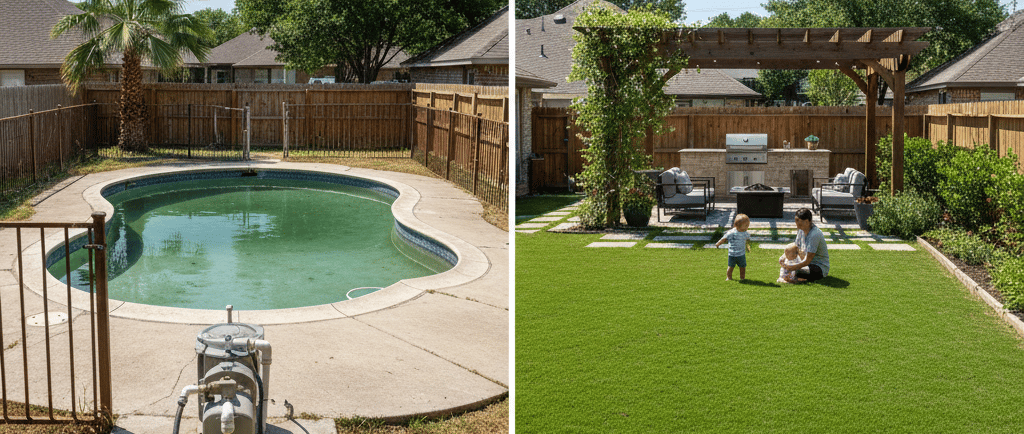
Does Removing a Pool Increase Home Value in the 2026 Market?
In the heat of a Texas summer, a backyard pool can feel like an oasis. But as we move through 2026, many homeowners in Houston and San Antonio are discovering that the "Pool Premium" isn't what it used to be. Between rising insurance premiums, surging electricity costs, and a new generation of buyers seeking low-maintenance living, removing a pool can often be a smarter financial move than keeping one.
At HouseDemoTX, we help homeowners reclaim their backyards. Here is the 2026 reality of how pool removal impacts your property value and marketability.
1. The "Buyer Pool" Paradox
While you might love your pool, having one automatically disqualifies a significant portion of potential buyers. In the current market, a pool can actually shrink your "buyer pool":
The Safety Seekers: Families with toddlers or young children often view an open pool as a high-stakes liability rather than a luxury.
The Budget-Conscious: With 2026 energy prices, the cost to run pumps and heaters has made many buyers wary of "hidden" monthly expenses.
The Minimalists: Many modern buyers prefer "Green Space" over "Blue Space"—wanting room for a garden, an outdoor kitchen, or an ADU (Accessory Dwelling Unit)
Market Insight: Real estate experts estimate that removing an old or high-maintenance pool can increase your home's marketability by up to 40% by appealing to these buyer segments.
2. When a Pool Becomes a "Net Negative"
Not all pools add value. In 2026, your pool likely hurts your home value if:
It’s Over 15 Years Old: Modern buyers see an older pool and think "leaks" and "resurfacing costs" (which can now exceed $15,000).
It Dominates the Yard: If the pool takes up more than 50% of your usable backyard, it is often viewed as a detriment.
It’s the Only One in the Neighborhood: If most neighboring homes don't have pools, your property becomes an "outlier," which can complicate appraisals and slow down a sale.
3. The Hidden "ROI" of Removal
Removing a pool isn't just about the sale price; it's about the immediate return on your monthly cash flow. In 2026, Texas homeowners are seeing these average annual savings after a swimming pool removal:
Expense Category Average Annual Savings (Texas 2026)
Maintenance & Chemicals $1,800 – $2,400
Electricity (Pumps/Heaters) $800 – $1,200
Homeowners Insurance $300 – $600
Water Usage $200 – $400
Total Annual Savings **$3,100 – $4,600**
4. The "Surgical Removal" vs. "Fill-In"
To maximize value, the way you remove the pool matters.
Full Removal: This is the gold standard for property value. We remove every piece of concrete and re-grade the soil. This allows you to legally state that the lot is "buildable," meaning a future owner could put an addition or a deck exactly where the pool was.
Partial Fill-In: Cheaper upfront, but must be disclosed during a sale. In 2026, savvy buyers often prefer homes with full removals to avoid future sinkage or drainage issues.
5. Summary: Should You Pull the Plug?
If your pool is a source of stress rather than joy, 2026 is the year to reclaim your land. A clean, open backyard is a "blank canvas" that allows buyers to imagine their own future—whether that’s a lush lawn, a playground, or a modern patio.