We handle permits, inspections, utility coordination, demolition, and cleanup — so you don’t have to stress or guess

Dealing with Old Insulation: Mobile Home Demo Safety Rules
In 2026, mobile home demolition in Texas isn't just about the wrecking ball; it's about managing the materials that make up the structure. One of the most overlooked risks is old insulation. Whether it’s pink fiberglass, gray cellulose, or the dreaded vermiculite, improper handling during demo can lead to severe respiratory issues or skin irritation. At HouseDemoTX, we follow strict safety protocols to ensure these materials are contained and disposed of without contaminating your property.
MOBILE HOME DEMOLITION
1/30/20262 min read
Dealing with Old Insulation: Mobile Home Demo Safety Rules
Many older manufactured homes, especially those built before 1990, contain insulation materials that require specialized handling. Here are the "Golden Rules" we follow to keep our crews and your land safe.
1. Identify Before You Destroy
Not all insulation is created equal. Before we start the mobile home demolition, we identify what we are dealing with:
Fiberglass (Pink/Yellow/White): Soft and fluffy but filled with tiny glass shards. It is a major skin and lung irritant.
Cellulose (Gray Shards): Looks like shredded newspaper. It’s extremely dusty and often harbors mold or rodent droppings in older units.
Vermiculite (Pebble-like): Most common in pre-1980s units. Danger: This material can contain asbestos. If we suspect vermiculite, we stop work for professional testing immediately.
2. The PPE "Suit Up" Protocol
You will never see a HouseDemoTX crew member handling insulation in a t-shirt. Our safety standard for 2026 includes:
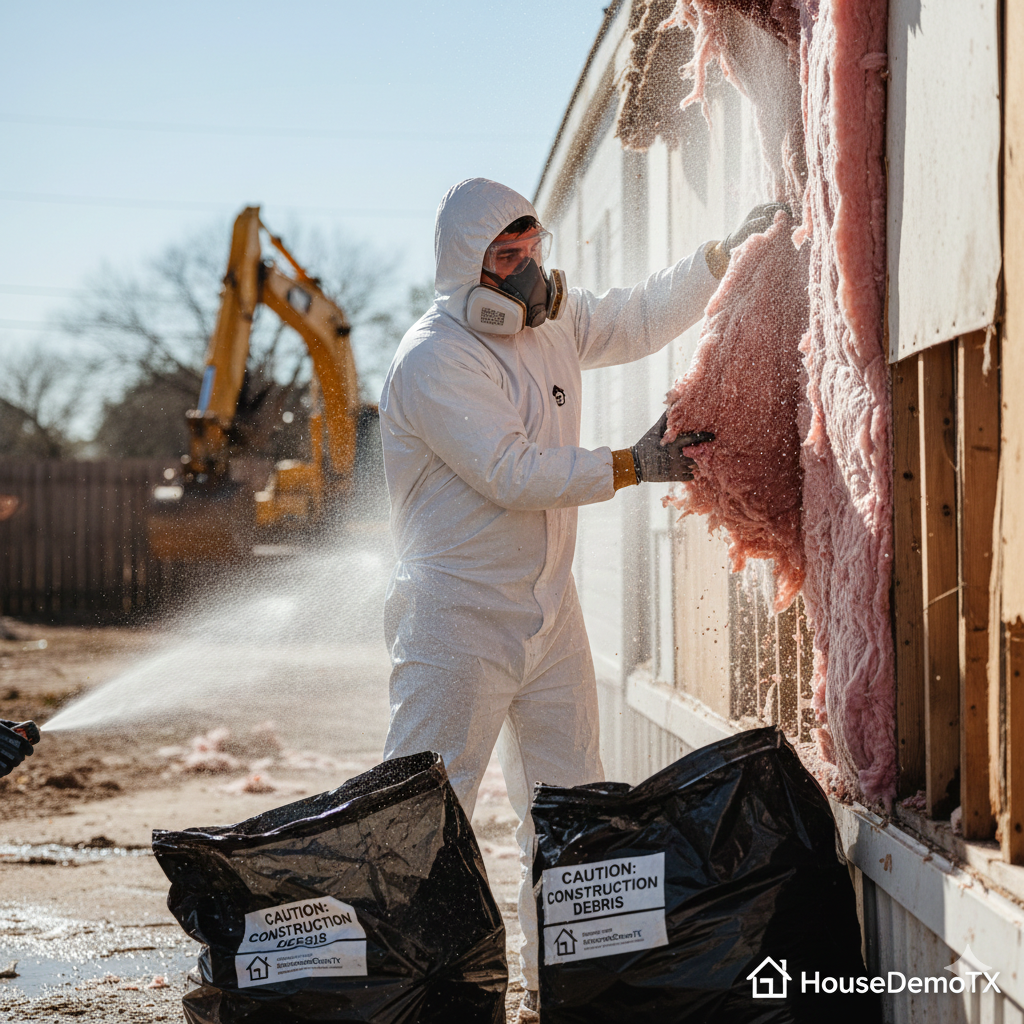
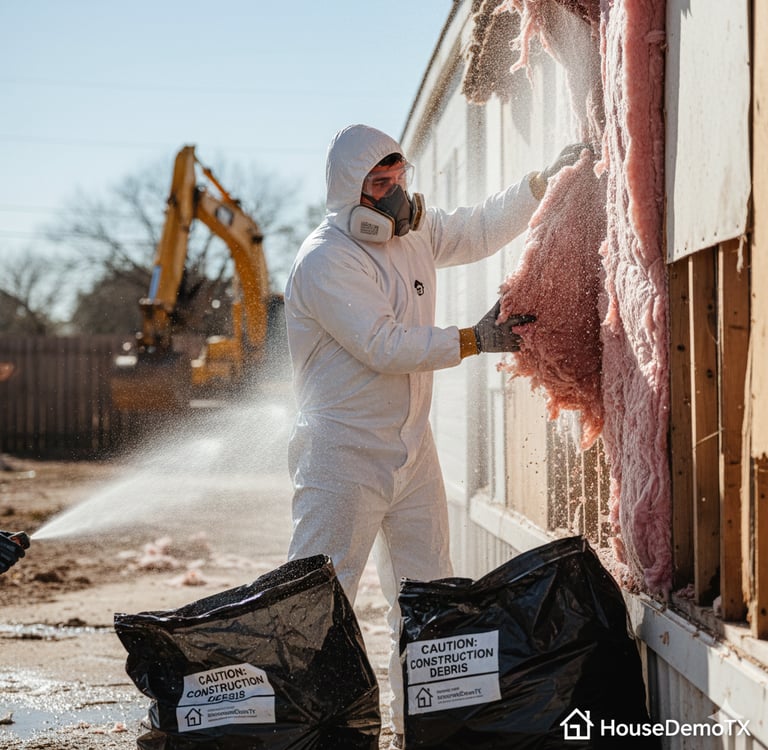
Disposable Tyvek Suits: Full-body protection that is taped at the wrists and ankles to keep fibers out.
N95 or P100 Respirators: A simple dust mask isn't enough. We use rated respirators to filter out microscopic glass and asbestos fibers.
Sealed Goggles: To prevent "fiberglass eye," which can cause permanent corneal scratching.
3. Wetting Down the Site (Dust Suppression)
Dry insulation is dangerous insulation. As we peel back the exterior siding or roofing of a mobile home, we use a fine-mist water spray.
Why it works: Wetting the insulation increases its weight and prevents the fibers from becoming airborne and drifting into neighboring yards.
The Goal: Containment. By keeping the materials "heavy," they fall straight into the disposal bin rather than floating through the air.
4. HEPA Vacuuming & Bagging
For loose-fill insulation (the "blown-in" kind), we don't just scoop it up.
Containment: We often bag the insulation while it is still in the wall or ceiling whenever possible.
HEPA Filtration: If we have to vacuum out debris, we use industrial vacuums equipped with HEPA filters to ensure no fine dust is exhausted back into the environment.
Insulation Hazard Comparison
Material Common Color Risk Level 2026 Disposal Rule
Fiberglass Pink/Yellow Moderate Sealed heavy-duty bags; C&D Landfill.
Cellulose Gray/Brown Low/Moderate High dust risk; requires wetting.
Vermiculite Gray/Silver EXTREME Requires Asbestos Abatement if positive.
Wet/Moldy Dark/Black High Biohazard protocols for mold spores.
HouseDemoTX Tip: In many Texas counties, you cannot simply dump mobile home insulation in a standard residential bin. Most landfills require it to be double-bagged and labeled as "Construction & Demolition Debris." We handle all the permitting and disposal paperwork so you don't have to.
Safety First, Every Time
Don't let a "DIY" demo turn into a health crisis. Inhaling old insulation fibers can lead to lifelong respiratory complications. HouseDemoTX treats every demo with the precision of a medical procedure.